
What makes Meta ads work for eyewear
Meta ads work for eyewear when they show frames on faces that look like the viewer's, demonstrate the lens in real conditions and remove the try-on risk with home try-on, virtual try-on or easy returns. Prescription glasses need a simple path for uploading a prescription. Sunglasses behave more like fashion, with stronger seasonality and more impulse buying.
The category has two very different buyers. Prescription buyers are solving a need, comparing prices with their optician and worried about getting the measurements right. Sunglasses buyers are often shopping for style, a holiday or a gift. One ad rarely serves both, so build separate campaigns and creative for each.
Face fit is the emotional core. People want to know whether a frame suits their face shape and colouring, and whether it will feel like them. Brands that show many faces, honest fit information such as lens width and bridge size, and a forgiving returns process tend to convert more confidently.
Creative checklist
- Faces first, many of them. A rapid sequence of the same frame on five different people stops the scroll and answers "will it suit me?".
- Measurements on screen in the copy. Lens width, bridge and arm length in millimetres help regular glasses wearers check fit against their current pair.
- Real lens tests. Polarised, photochromic and anti-glare demos should be filmed, not simulated, and match exactly what the product does.
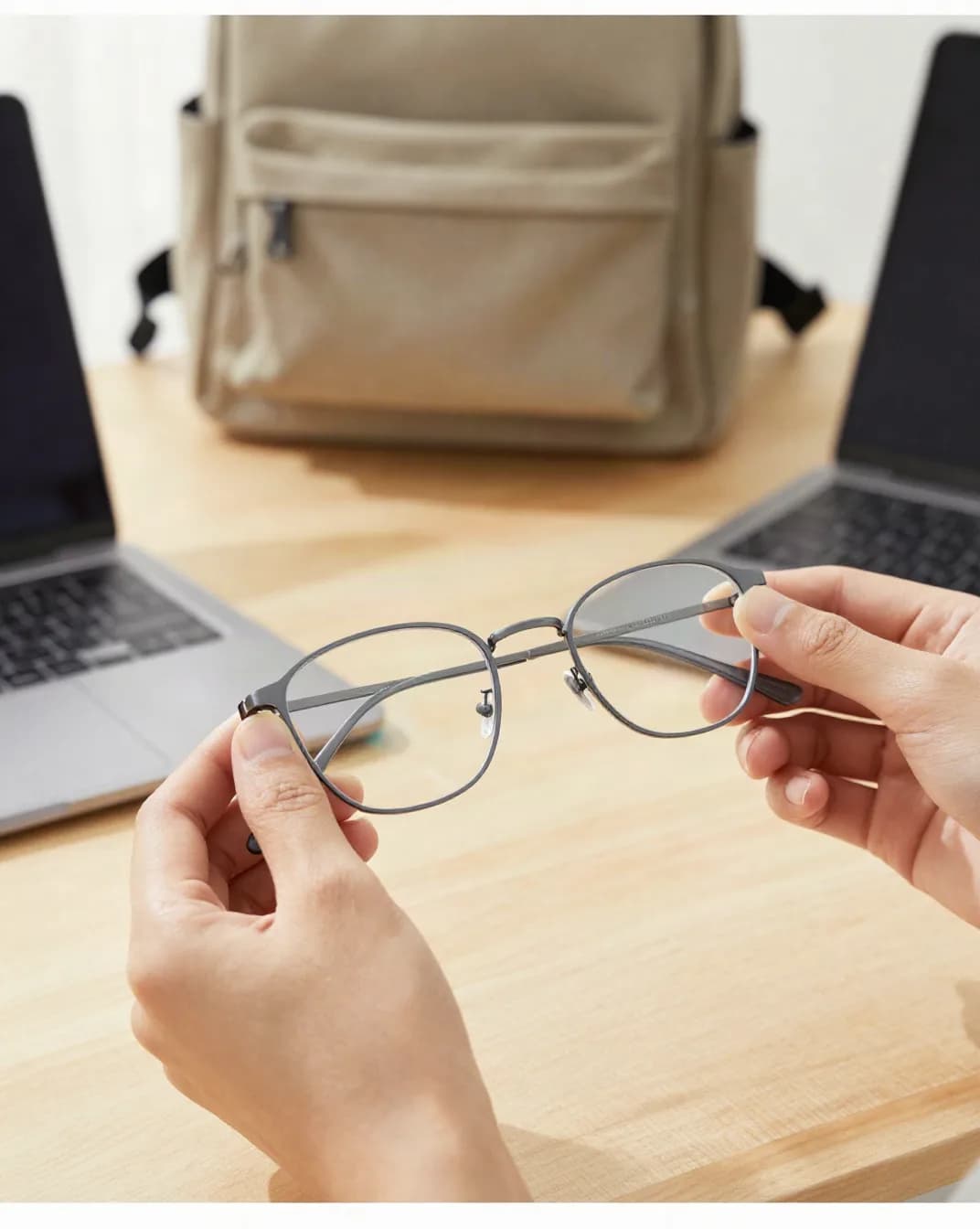
- Close-ups of details. Hinges, acetate layers, nose pads, the case and cloth.
- Light and reflections. Shoot to avoid glare on the lenses, which hides eyes and makes frames look cheap.
- Format mix. 4:5 images for frames on faces, 9:16 Reels for try-on sequences and lens demos, carousels for colourways.
Creator footage of real people trying frames suits this category well. The UGC ads guide covers how to brief it.
Targeting and audiences
Start broad with Advantage+ audience. Frame style, price point and use case filter the audience on their own. Fashion, outdoor sport and travel interests can be suggestions for sunglasses.
- Retargeting: frame viewers and people who started a try-on or prescription upload. Those are high-intent signals worth a dedicated message.
- Catalogue ads: large frame ranges suit Advantage+ catalog ads, so viewers see the frames and colours they looked at.
- Replacement: prescription wearers update their glasses periodically. Past buyers are worth a reminder when your own data shows they tend to return.
Offers and landing pages
Home try-on, virtual try-on and generous return windows reduce the biggest risk. A second-pair offer, prescription sunglasses as an add-on, or blue-light and anti-glare options as clear upgrades raise order value. In the US, some buyers can use FSA or HSA funds for prescription eyewear, which is worth explaining near the end of the benefits year if it applies to your products.
The landing page should show frame measurements, faces of different shapes, lens options with plain-English explanations, the prescription process step by step, and what happens if a prescription order isn't right.
When should eyewear brands spend more?
Sunglasses lead in spring and summer and around holiday travel. Prescription glasses are steadier, with lifts around back-to-school and, in the US, the end of the year when unused benefits are spent. Gifting peaks matter more for sunglasses than for prescription frames. Prepare summer creative early, because many brands compete for the same sunny weeks.
Compliance to watch
Read Meta's Advertising Standards and the medical-device rules where you sell.
- Prescription lenses and contact lenses. These are regulated medical devices in many countries, and some markets require a valid prescription to sell them. Check local law before advertising them, and keep claims to the product.
- Personal attributes. "Struggling to read small print?" implies the viewer has a vision condition. "Reading glasses in three strengths" describes the product.
- Health claims. Claims that blue-light lenses prevent eye strain, improve sleep or protect eye health need evidence you could produce. Describe the filter, not a health outcome.
- UV protection. "UV400" or "100% UV protection" should be backed by testing to a recognised sunglasses standard, such as ISO 12312-1.
- Designer lookalikes. Copying a famous frame's signature design or logo can breach Meta's intellectual property rules.
| Instead of | Try |
|---|---|
| "Stops digital eye strain" | "Lenses that filter a portion of blue light, with an anti-glare coating" |
| "Can't see well anymore?" | "Varifocals made to your prescription, with a free adjustment" |
| "Designer style for less" | "Classic square acetate frames, 52 mm lens width" |
Metrics to watch
Prescription orders carry remake costs, so include them when you set targets with the CPA calculator.
Example: say $129 prescription glasses cost $28 for the frame and lenses, $9 to ship and $4 in fees, leaving $88, a break-even ROAS of 129 ÷ 88 = 1.47. Add a $5 per-order allowance for remakes when a prescription or fit goes wrong, and contribution falls to $83, with break-even ROAS rising to about 1.55. A $69 pair of sunglasses with $14 product cost, $6 shipping and $2.50 fees leaves $46.50, a break-even ROAS of 1.48 but much less room per sale.
Also track try-on starts to purchases, prescription upload completion, return rate by frame, and hook rate on try-on Reels.
How Fly ROAS helps
Fly ROAS reads your site into a Brand DNA, decodes long-running eyewear ads in the Meta Ad Library into recipes, and builds ads from your real frame photos in scenes like a sunny café or a lakeside walk. Launches can be paused for your approval, which helps when lens claims need checking. Compare the jewellery playbook for accessory styling ideas.
Frequently asked questions
Do Facebook ads work for eyewear brands?
They can, especially for sunglasses and direct-to-consumer prescription brands with a clear try-on process. The key is showing frames on many different faces and removing the risk of a bad fit with home try-on, virtual try-on or easy returns. Judge results after returns and remakes, not on checkout revenue alone.
Can you advertise prescription glasses and contact lenses on Meta?
Often yes, but they are regulated medical devices in many countries and some markets require a valid prescription to sell them, so check local law first. Keep claims factual, avoid copy that implies the viewer has a vision problem, and make sure the landing page explains the prescription process clearly.
Can I claim blue-light glasses reduce eye strain?
Only if you have evidence you could produce on request. Health outcome claims, such as preventing eye strain or improving sleep, fall under Meta's Health and Wellness rules and consumer protection law. It is safer to describe what the lens does, such as filtering part of the blue-light range, and let the viewer decide.
When should sunglasses brands run Meta ads?
Spring, summer and holiday travel periods are the natural peaks, with smaller lifts around gifting dates. Start testing creative before the season starts, because ad costs rise as competitors move in, and use the quieter months to find winning hooks and refresh your catalogue.