

What makes Meta ads work for a jewellery business
Jewellery is made for visual feeds: sparkle, colour and styling stop the scroll on their own. What stops the purchase is doubt. People can't judge size, weight or metal quality through a phone, and they know that plated and solid pieces can look alike in a photo. The ads that sell answer those doubts inside the creative.
It's also a calendar business. Demand clusters around Raksha Bandhan, Diwali, Karwa Chauth, Valentine's Day, anniversaries and wedding season, and auction costs rise with it (see what Meta ads cost in India). Plan creative and budget a few weeks ahead of each peak rather than reacting to it.
Creative checklist
- Show true size. At least one on-body shot per piece, next to familiar things like a hand, an ear or a chai glass, with dimensions in the copy.
- Movement. A short clip of earrings swinging or a pendant catching the light sells shine better than any still.
- Honest colour. Diffused daylight keeps gold looking like gold. Edits that change stone colour or size lead to returns.
- Material, stated plainly. 925 sterling silver, 18k gold-plated brass, lab-grown diamond, hallmarked 22k gold: whichever is true, say it.
- Styling ideas. Layering and stacking carousels lift order value naturally.
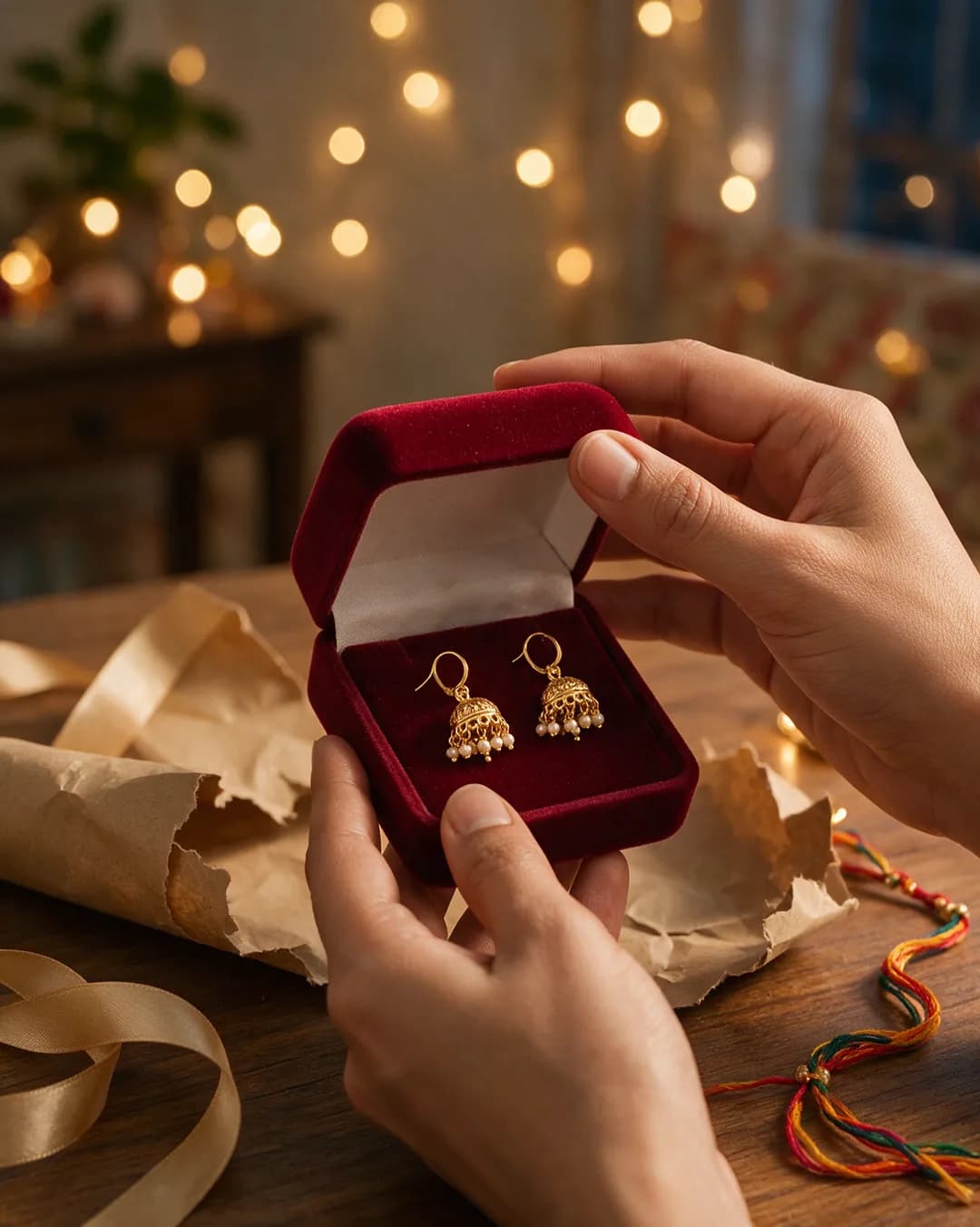
- Packaging. Show the gift box. For gifting buyers it's part of the product.
Targeting and audiences
Start broad with Advantage+ audience and write each ad for a specific buyer. A self-purchase ad ("everyday gold for the office") and a gifting ad ("for your sister, delivered before Rakhi") reach different people without narrow targeting. Add past purchasers and engaged followers as audience suggestions.
- Retargeting: jewellery has a longer consideration cycle than most impulse categories, especially above a few thousand rupees, so retarget product viewers over a longer window with trust content: certificates, reviews, a making-of video.
- Catalogue ads: with a large range, Advantage+ catalog ads show people the exact pieces they viewed.
- Lookalikes: seed from buyers above your average order value if you want more of them.
Offers and landing pages
Free gift wrapping, a handwritten note and a delivery-by date often beat a discount for gifting buyers. For self-purchase, sets (earrings plus a matching pendant) and "complete the stack" offers lift order value. Engraving and personalisation support premium pricing but slow delivery, so say how long they take.
In India, COD on high-value jewellery carries real RTO and fraud risk. Common approaches are COD only below a set price, a small token prepayment with the balance on delivery, and a confirmation call before dispatch. The product page should show on-body scale, dimensions and weight, material and care, certificates or hallmark details, and the returns and exchange policy.
Compliance to watch
Check Meta's Advertising Standards and local consumer law before you scale.
- Material and purity claims. In India, gold jewellery sold to consumers generally has to carry BIS hallmarking with a HUID code. Don't call plated pieces "gold" without qualification, and back claims like "hypoallergenic", "waterproof" or "tarnish-free" with testing.
- Lab-grown and simulated stones. Describe them clearly. Implying natural diamonds is deceptive.
- Counterfeits and trademarks. "Inspired by" a luxury house, or copies of signature designs and logos, can breach Meta's intellectual property rules.
- Body-focused crops. Meta asks that imagery focused on individual body parts, such as the chest, be targeted at people 18 and over. Frame necklaces around the collarbone and face.
- Deceptive pricing. Inflated "was" prices and fake countdowns can breach Meta's rules and India's dark-patterns guidelines.
Metrics to watch
Price bands behave differently, so review results by band as well as overall. Set targets with the CPA calculator: your maximum CPA is the contribution left after product, packaging, shipping and fees.
Example: a ₹2,499 pair of silver earrings (about $26) with ₹700 product and packaging cost, ₹80 shipping and ₹75 fees leaves ₹1,644, so you can pay up to ₹1,644 per sale and still break even (break-even ROAS 1.52). A ₹24,999 gold piece has far more room per sale but needs more touchpoints, so judge it over a longer attribution window.
Also watch CPM through festival weeks, average order value, and RTO rate by pin code.
How Fly ROAS helps
Fly ROAS builds ads from your real product photos, flags any where metal colour, stones or scale drift from them, and places them into new scenes such as gifting tables or everyday outfits. Its competitor radar decodes long-running jewellery ads in the Meta Ad Library into reusable recipes, and Autopilot runs 48-hour tests within a monthly cap only you can raise, by default pausing any test that spends twice your target CPA without a sale. Selling clothing too? See the fashion and apparel playbook, or see pricing.
Frequently asked questions
Do Facebook ads work for a jewellery business?
They can, particularly for demi-fine, silver and gift-led ranges where people buy on looks and a clear price. Fine jewellery usually needs more trust-building, such as hallmarking, certificates and video consultations, and a longer path to purchase. Either way, margins, creative and the offer decide profitability more than the platform does.
How do I photograph jewellery for Instagram ads?
Shoot a clean macro of each piece and at least one on-body shot that shows real scale, in soft daylight or diffused light that keeps metal colour accurate. Add a short clip of the piece moving, since shine and movement sell jewellery. Avoid edits that change stone colour or size.
When should jewellery brands run ads in India?
Demand clusters around Raksha Bandhan, Diwali, Karwa Chauth, Valentine's Day and wedding season. Start gifting creative two to three weeks before each date so ads have time to exit the learning phase, and expect higher CPMs during the busiest weeks. Keep evergreen self-purchase ads running between peaks.
Should I offer cash on delivery for jewellery?
For lower-priced pieces COD can lift conversion, but high-value orders carry more RTO and fraud risk. Common compromises are COD only below a price threshold, a small token prepayment with the balance on delivery, and confirmation calls before dispatch. Track cost per delivered order so the real cost of COD is visible.