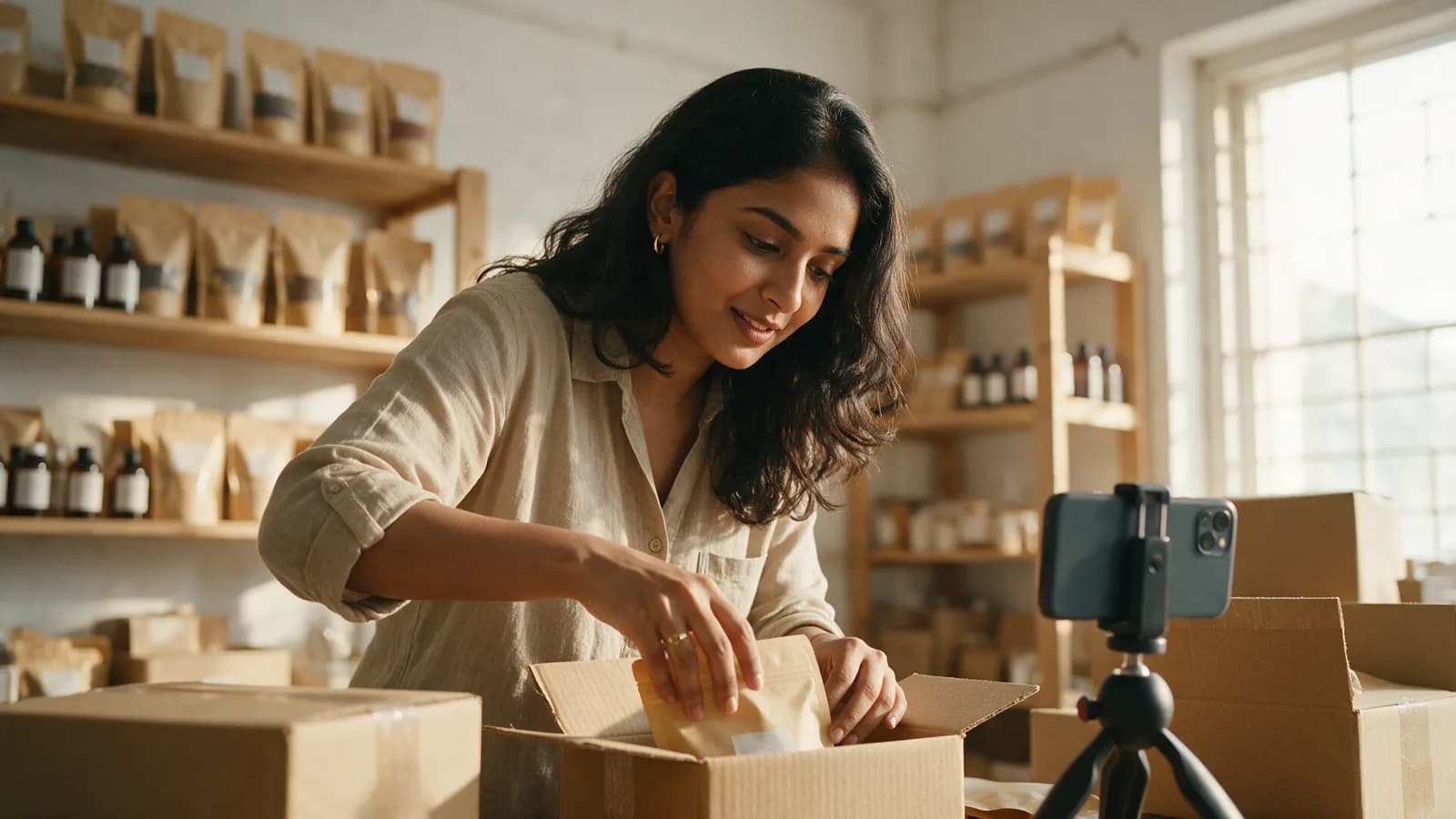

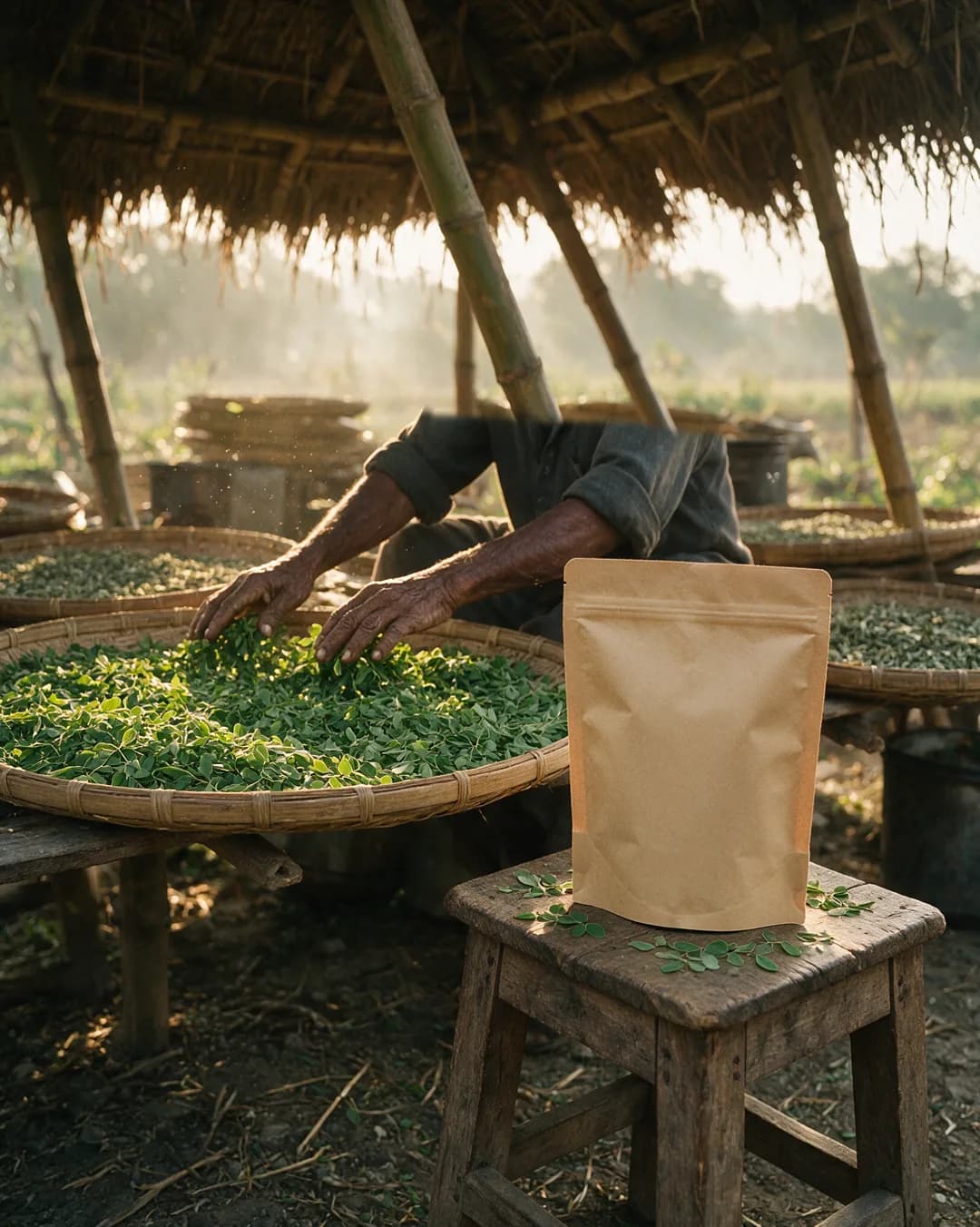

What makes Meta ads work for ayurvedic products
Ayurvedic and herbal products sell on trust. People are buying something they will take every day, often at a higher price than a supermarket equivalent, from a brand they met in a feed a few seconds ago. The ads that work close that gap with specifics: which herb, which part of the plant, where it was grown, how it was processed and how to use it.
The second constraint is claims. The benefit people care about is usually health-related, and that is exactly what Meta's policies and Indian law restrict. So the winning pattern is to sell the ritual, the ingredient and the proof, and let the viewer connect the dots. It is also a repeat-purchase category, so judge acquisition cost against customer lifetime value, not just the first order. For the wider India picture, see Facebook and Instagram ads for D2C brands in India.
Creative checklist
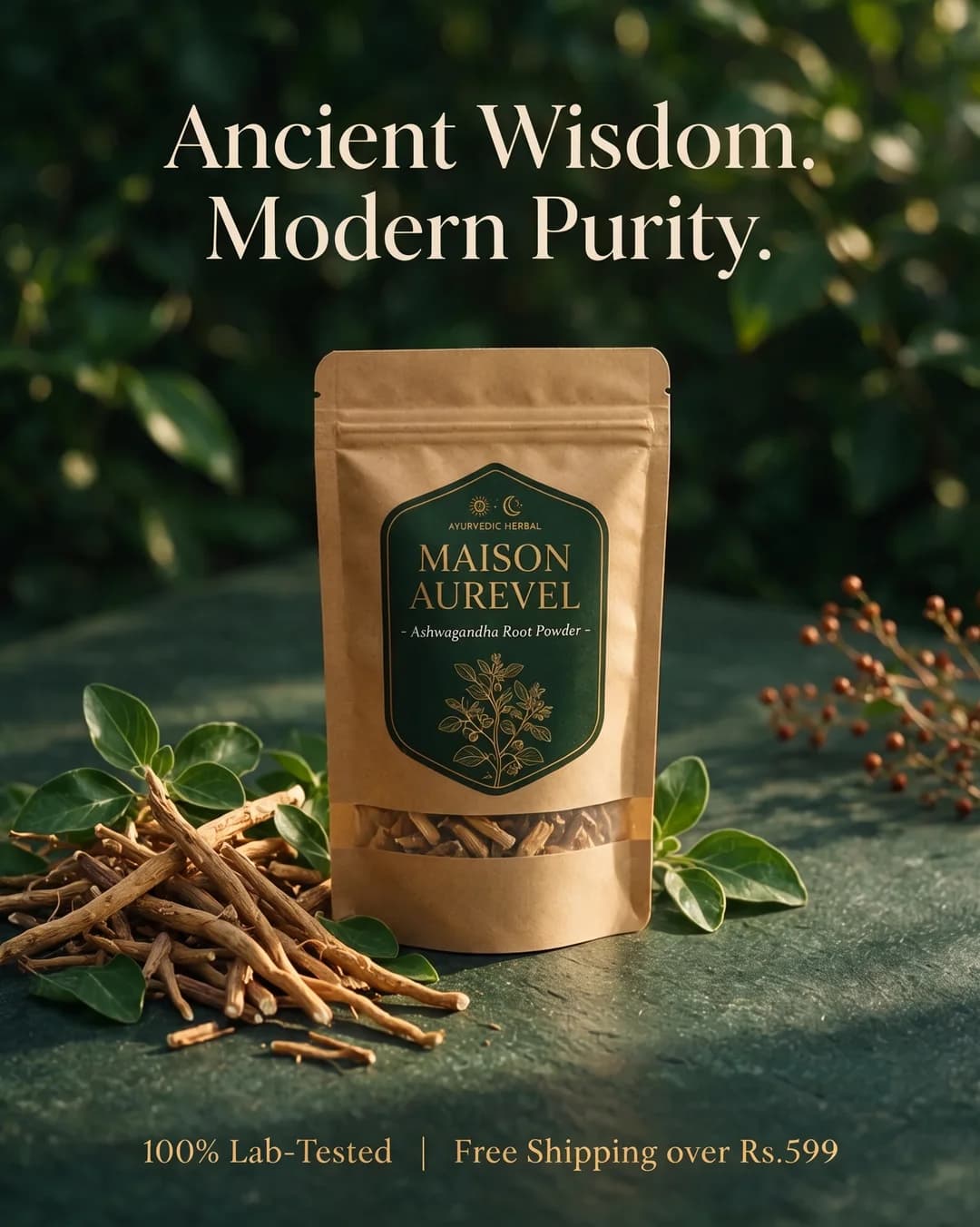
- Real pack, first frame. Show the actual pouch, jar or bottle in the first second, with the herb name readable.
- Name the herb and the form. "Ashwagandha root powder" beats "our wellness blend".
- Show usage. Dose, time of day and method: half a teaspoon in warm milk, two capsules after breakfast, a weekly oil massage.
- One proof point per ad. Batch testing, sourcing region, licence details or a full ingredient list, and only what you can document.
- Test languages. Hindi and regional-language versions are worth testing alongside English, because interest in ayurveda runs well beyond English-first metros.
- Mix formats. 4:5 images for the pack and offer, 9:16 Reels for preparation demos, carousels for herb, process and ritual.
Keep primary text short and concrete. The Facebook ad copy formulas guide has patterns that suit ingredient-led products.
Targeting and audiences
Start broad with Advantage+ audience and let the creative do the filtering: a tulsi tea ad and a hair-oil ad will find different buyers on their own. Interests such as yoga, Ayurveda or organic food can go in as audience suggestions, but treat them as signals rather than fences. Meta has also removed detailed targeting options tied to health topics, so broad targeting with specific creative is the realistic route.
- Retargeting: product viewers and add-to-carts from the last 7 to 14 days, with a reason to come back, such as a starter size, a preparation video or a prepaid offer.
- Lookalikes as seeds: build them from purchasers, ideally repeat purchasers, and add them as suggestions rather than hard limits.
- Existing customers: keep reorders in a smaller retention budget so prospecting numbers stay honest.
- Age: Meta requires ads for dietary and health products to target people aged 18 or over.
Offers and landing pages
Cash on delivery still matters in India, especially outside the metros, but it brings RTO (return to origin): orders refused at the door that cost you shipping both ways. The usual fixes are a small prepaid discount, WhatsApp confirmation of COD orders before dispatch, and switching COD off for pin codes with repeated returns.
Strong first offers include a trial size, a 30-day ritual pack, or a bundle that pairs a hero herb with a complementary product. The landing page should match the ad image, state dosage and ingredients, show licence details and make the same careful claims as the ad.
Compliance to watch
This is the category where rejections cluster. Before you brief creative, read the Health and Wellness and Personal Attributes sections of Meta's Advertising Standards.
- No personal attributes. Copy can't assert or imply the viewer's health: "Struggling with stress?" is out, while describing the product is fine.
- No cure claims or clickbait. Meta lists incurable diseases, such as diabetes and thyroid disease, that ads can't claim to cure, and it bans sensational promises of specific results within a set time.
- Medicines and hemp. Anything sold as an over-the-counter medicine must follow local law and target 18+, and Meta currently allows hemp product ads only in Canada, Mexico and the US.
- Indian law. The Drugs and Magic Remedies (Objectionable Advertisements) Act restricts claims for listed diseases, AYUSH rules govern ayurvedic medicines, and ASCI's code applies, including influencer disclosure. This isn't legal advice, so take advice specific to your product.
| Instead of | Try |
|---|---|
| "Cures joint pain in 7 days" | "Ashwagandha root powder, taken daily in warm milk" |
| "Are you always stressed?" | "A 10-minute evening ritual with warm milk" |
| "Doctor recommended" (no proof) | "Formulated with a BAMS practitioner" (only if true) |
Metrics to watch
Judge every test against your own break-even, not a generic benchmark. Work it out with the break-even ROAS calculator.
Example: a ₹699 pouch (about $7) costs ₹160 to make, ₹80 to ship and ₹30 in payment fees. Contribution is ₹429, so break-even ROAS is 699 ÷ 429 = 1.63 and the most you can pay per sale is ₹429. If one in five orders comes back as RTO, your ad cost per delivered order is 25% higher than the CPA in Ads Manager, before counting the wasted shipping.
Also watch hook rate on Reels, repeat-purchase rate at 60 and 90 days, and frequency on retargeting.
How Fly ROAS helps
Fly ROAS reads your site into a Brand DNA, scans long-running ayurveda ads in the Meta Ad Library to decode the hooks and layouts that keep working (without copying them), and builds ads from your real pack photos in 95+ languages, Hindi included. Autopilot then runs 48-hour tests inside a monthly cap only you can raise. See how Autopilot works, or compare the supplements and wellness playbook.
Frequently asked questions
Can you advertise ayurvedic products on Facebook and Instagram?
Yes. Ayurvedic and herbal products can be advertised as long as the ads follow Meta's Advertising Standards and local law. In practice that means no claims to cure or treat diseases, no copy implying the viewer has a health condition, 18+ targeting for health products, and a landing page that makes the same careful claims as the ad.
Why do ayurvedic product ads get rejected on Meta?
The usual triggers are cure or treatment claims, sensational promises of results within a set time, and personal-attribute lines such as "Suffering from joint pain?". Landing pages that go further than the ad can also cause rejections. Rewrite around the herb, the ritual and documented proof, then request another review in Account Quality if you believe the decision was wrong.
How much should an ayurvedic brand spend on Meta ads to start?
Work backwards from your break-even CPA rather than picking a round number. For example, if your break-even CPA is ₹400 and you want at least three purchases before judging a creative, each test needs roughly ₹1,200 or more. Start with two or three tests at a time and add budget to the ones that beat your target.
Should I offer cash on delivery for ayurvedic products?
COD often lifts conversion in India, particularly outside the metros, but it brings RTO: orders refused at the door that cost shipping both ways. Many brands keep COD while nudging prepaid with a small discount, confirming COD orders on WhatsApp before dispatch and switching COD off for pin codes with repeated returns. Judge ads on cost per delivered order, not per order placed.