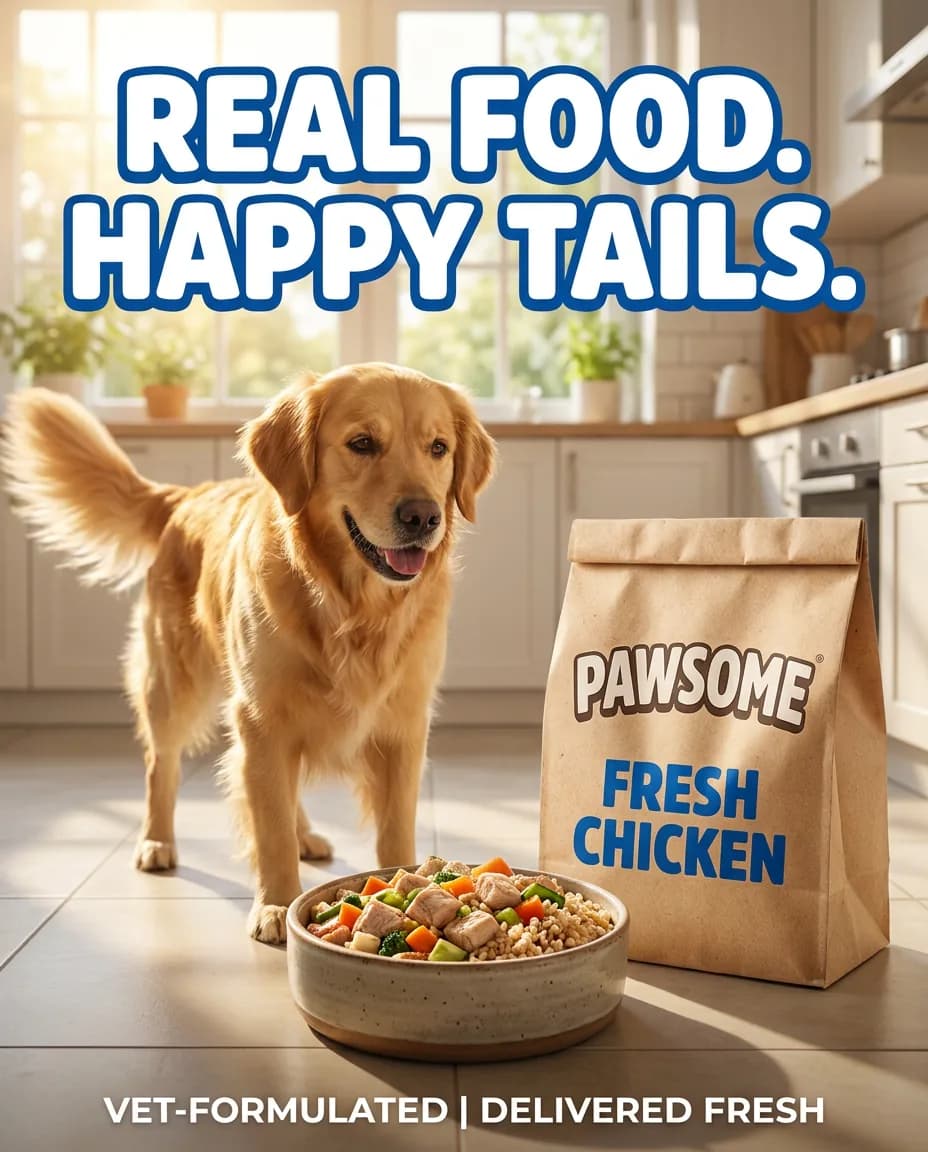


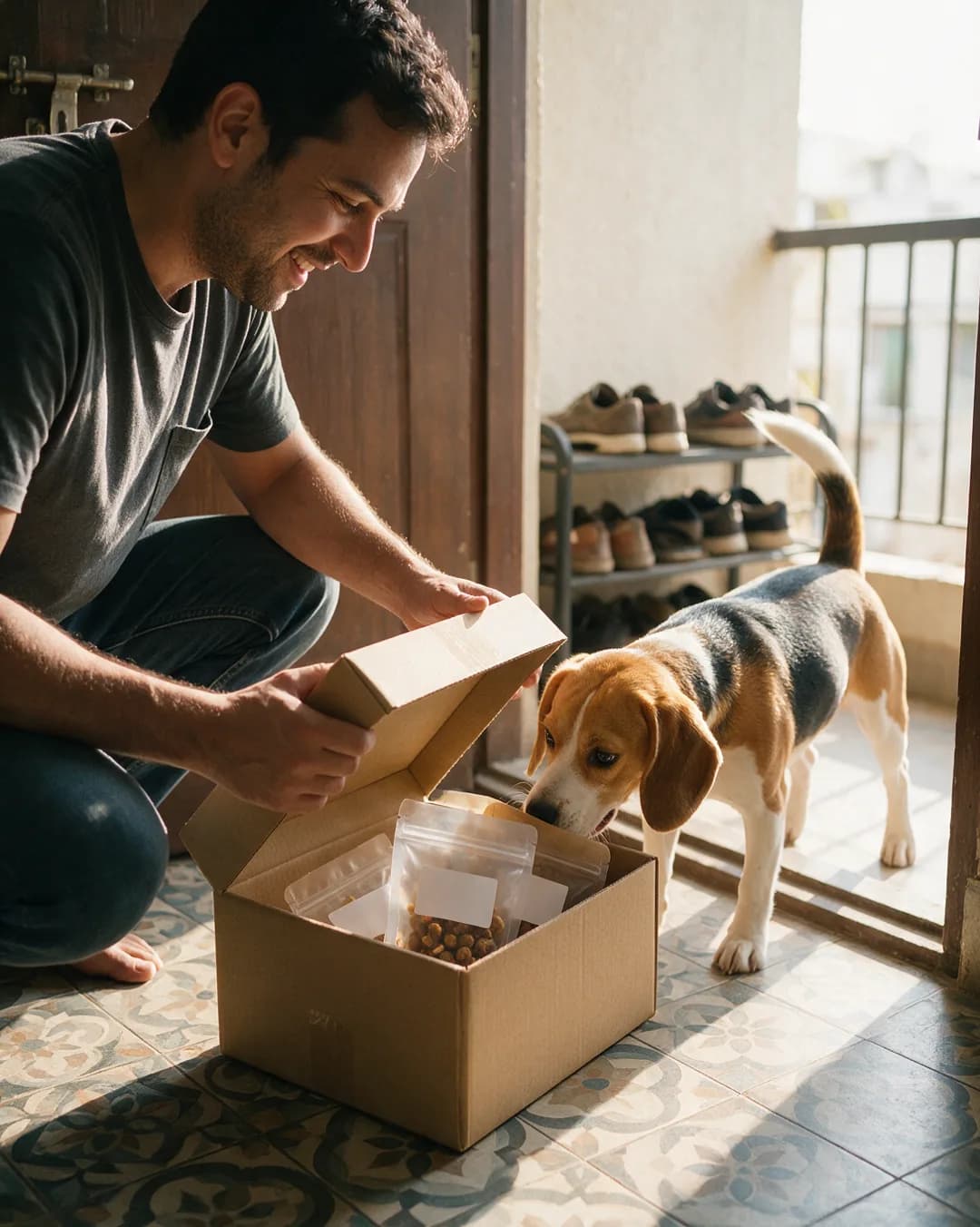
What makes Meta ads work for pet products
Pet brands start with an advantage: people stop for pets. A dog tilting its head at a new toy earns the kind of attention other categories pay heavily for. The ad's job is to turn that affection into trust: show what's in the food, how the harness is made, whether the toy survives, and that you see pets as family.
The strongest economics sit in consumables (food, treats, litter, grooming supplies) because they're reordered on a predictable cycle. Durables like beds, harnesses and toys depend more on creative volume and catalogue retargeting. In India, show the pets your buyers actually live with, including indies and cats, not only pedigree breeds from stock libraries.
Creative checklist
- Pet in the first second. Eye-level shots, real homes, sound on: a crunch, a squeak, a happy bark.
- Candid over staged. Phone footage of real pets reacting honestly beats a studio shoot with trained animals.
- Ingredient or material proof. Show the food in the bowl, the stitching on the harness, the thickness of the rope.
- Durability, honestly. Stress tests for toys and leashes, with claims limited to what you tested.
- Species-specific. Separate ads for dogs and cats. A generic "pet" ad dilutes both.
- Size and breed fit. For harnesses, beds and bowls, show which size suits which build.
A simple first test: one candid reaction video, one ingredient or material close-up and one durability demo for the same product, run side by side with equal budgets for 48 hours. Keep the winner and rework its opening second before trying new angles. Pet creative wears out like any other, so watch for the signals described in ad fatigue on Meta.
Targeting and audiences
Start broad with Advantage+ audience and let species-specific creative find pet parents. Pet-related interests, engaged followers and past buyers work well as audience suggestions.
- Retargeting: product viewers and cart abandoners, with a trial pack or a feeding guide.
- Reorder timing: retarget past buyers around the natural end of a pack, or better, move them onto a subscription.
- Lookalikes: seed from subscribers and repeat buyers, and add them as suggestions rather than hard limits (see lookalike audiences).
Offers and landing pages
Trial packs remove the "will my dog even eat it?" risk for food and treats. Subscriptions with a modest saving and easy pause or skip suit consumables, and bundles such as food plus treats or a harness plus leash raise order value. Gifting works too: birthday boxes and adoption-anniversary bundles give pet parents a reason to buy beyond the basics, and they photograph well. For COD orders in India, confirm before dispatch to limit RTO.
The landing page should show the ingredient list and feeding guide, a size chart with breed examples, the materials used, and a clear returns policy for items that don't fit.
Compliance to watch
Read Meta's Advertising Standards. The points that matter most for pet brands are:
- Live animals. Meta doesn't allow ads for peer-to-peer sale or trade of live animals. Adoption and rehoming are allowed.
- Health claims. "Cures itching" or "prevents joint disease" needs substantiation and can push a product into medicine regulation. "Vet-approved" or "vet-formulated" must be literally true.
- Veterinary medicines. Prescription and over-the-counter medicines fall under Meta's Drugs and Pharmaceuticals rules, so check before advertising any veterinary medicine.
- Animal welfare. Don't show pets in distress, danger or discomfort, even as a joke. Meta prohibits shocking or sensational content.
- Endangered species. Products derived from endangered species can't be advertised at all.
Metrics to watch
Consumable pet brands should judge acquisition over months, not a single order. Model your first-order limit with the CPA calculator.
Example: a ₹1,199 bag of dog food (about $12) with ₹620 product cost, ₹110 shipping and ₹36 fees contributes ₹433 per order. If your own data shows subscribers reorder four times on average in six months, each one contributes about ₹2,165 over that period, so a first-order CPA above ₹433 can still pay back, provided the retention is real.
Also track customer lifetime value, subscription churn after the second delivery, hook rate on pet videos, and CPA separately for dog and cat products.
How Fly ROAS helps
Fly ROAS reads your store into a Brand DNA and builds ads from your real pack and product photos, flagging any where labels or colours drift, in scenes such as feeding time or a walk in the rain. Competitor radar decodes long-running pet ads in the Meta Ad Library into recipes, and Autopilot runs 48-hour tests inside a daily limit and monthly cap only you can raise. See pricing.
Frequently asked questions
Do Facebook ads work for pet products?
Yes, pet products suit Facebook and Instagram because pet content earns attention naturally. Consumables such as food, treats and litter are especially promising because reorders improve the economics over time. Profitability still depends on margin, creative and a clear first offer.
Can I target dog owners or cat owners on Facebook?
You can add pet-related interests as suggestions, but broad targeting with species-specific creative often finds pet parents well, because the ad itself filters who responds. Build separate ads for dogs and cats rather than one generic pet ad, and retarget product viewers. Past buyers and lookalikes seeded from them can guide delivery too.
What kind of pet ads perform best?
There's no single winner, but real pets using the product, unscripted reactions, ingredient proof and durability demos are reliable angles to test. Keep the pet visible in the first second and the product clear. Rotate new footage often, since pet creative tires like any other.
Should pet food brands offer subscriptions?
Subscriptions suit food, treats and litter because they're used up on a predictable cycle. Offer a modest saving or free delivery, make pausing and skipping easy, and judge ads on expected customer value rather than the first order alone. Track how many subscribers stay past the second and third delivery.