Key takeaways
- UGC ads are ads built from creator-style footage: real people using the product on a phone, in their own words.
- A good brief fixes the angle, the must-say points and the shot list, and leaves the delivery to the creator.
- Most UGC scripts follow hook, problem, product, proof and call to action, in 20 to 45 seconds.
- Agree usage rights in writing before you pay, and use Meta partnership ads when you want to run the ad from the creator's handle.
- Test UGC like any creative: several hooks per video, equal budgets, verdicts on cost per purchase.
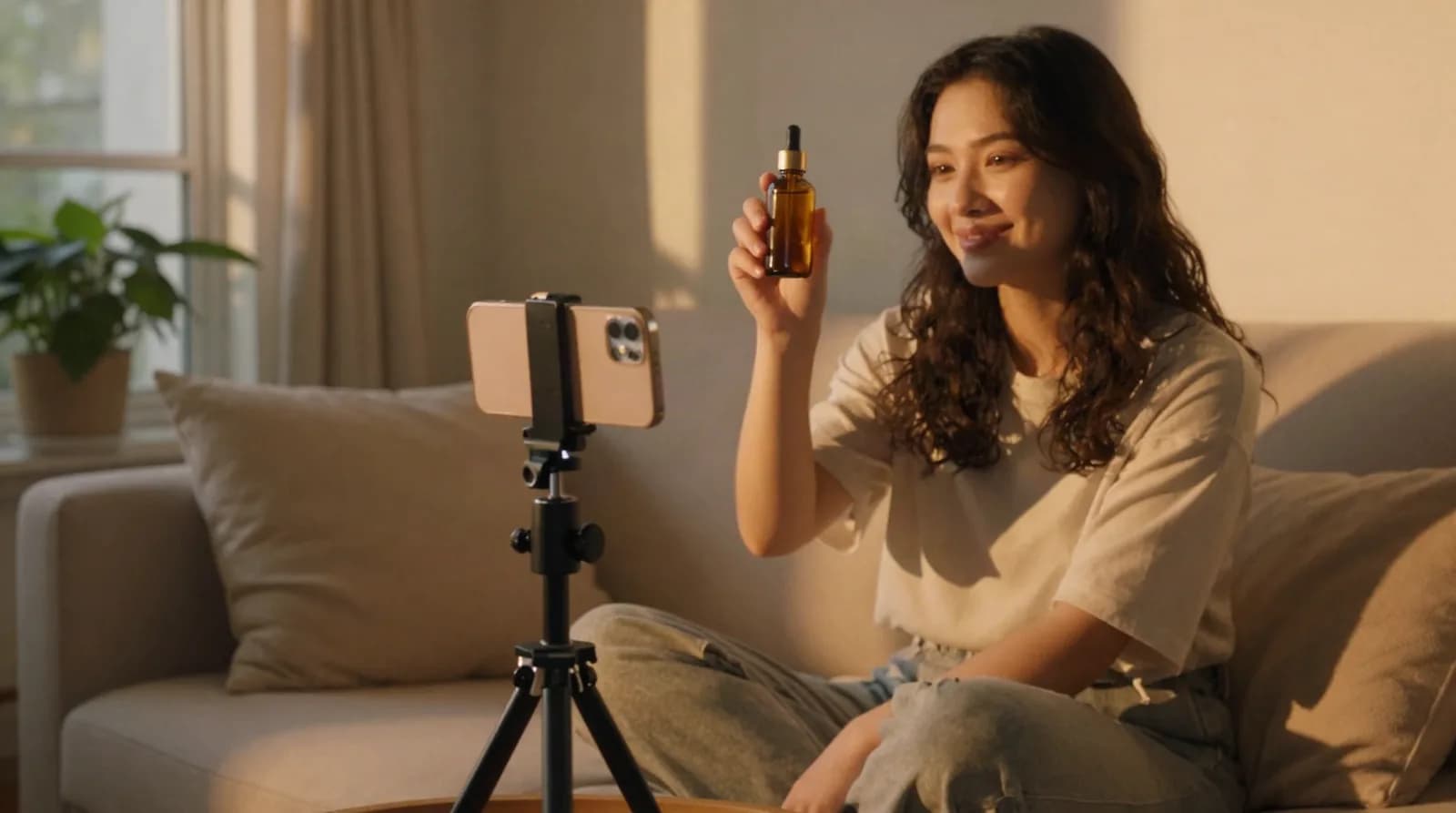
UGC ads are Meta ads built from user-generated-style content: short, phone-shot videos or photos of real people using your product in their own words. They work for e-commerce because they look native in Reels, Stories and Feed and carry social proof. Source creators who fit your customer, brief the angle rather than the script, get usage rights in writing, and test several hooks per video.
What are UGC ads?
UGC stands for user-generated content. In advertising it has come to mean two related things:
- Organic UGC: content real customers post without being paid, such as an unboxing on their own account or a review video. You need their permission to use it in ads.
- Commissioned UGC: content made by paid creators, often people who specialise in making ad-ready footage that looks like a customer's post. Most UGC in Meta ads today is this kind.
Either way, the format is the same. A person, a phone camera, a real setting and the product in use. The glossary entry on UGC ads has the short definition.
Why do UGC ads work for e-commerce brands?
There are three reasons, none of them magic.
- They look like the content around them. Reels and Stories are full of people talking to camera. An ad that looks the same gets a fairer first second than a glossy studio spot.
- They show the product in use. A creator applying a serum, wearing a jacket outside or making coffee answers practical questions that a packshot can't: size, texture, fit, how long it takes.
- They borrow trust. A face and a personal story feel more credible than brand copy, especially for new brands without recognition.
UGC is not automatically better than other formats. Some products sell better through clean product shots, motion graphics or founder videos. Treat UGC as one format in your mix, and let testing decide how much of it you need. The guide to static vs video ads covers how to compare formats fairly.
Where do you find UGC creators?
| Source | What it's good for | Watch out for |
|---|---|---|
| Your own customers | Authentic voice, real results, low cost | Inconsistent quality, slower turnaround |
| UGC creator marketplaces | Speed, volume, creators used to ad briefs | Footage can look generic if the brief is weak |
| Instagram and TikTok search | Finding creators already in your niche | Negotiating rights one by one |
| Micro-influencers | Audience overlap plus usable footage | Higher fees if you also want posting |
| Friends, staff and founders | Fast tests of new angles | Can feel staged, disclose relationships |
Whichever route you use, judge creators on three things: whether they look like your customer, whether they are natural on camera, and whether their past videos have strong first seconds. A portfolio of ads with sharp openings is worth more than follower count.
How many creators do you need?
More than one. Different faces, ages, voices and settings let you test who your audience responds to, and give Meta's delivery system variety to work with. A practical start for a small brand is three to five creators, each making two or three videos around different angles. Scale up once you know which creator types and angles win.
How do you write a UGC brief?
A brief should fix what matters and free everything else. Over-scripted UGC sounds read aloud, which defeats the point.
What a good brief includes
- The product and who it's for. One paragraph. Who buys it, what problem it solves, what they've tried before.
- The angle. One clear reason to buy for this video, such as "it saves time in the morning" or "it's the first one that hasn't irritated my skin". Pick it from a library of ad angles.
- Three hook options the creator can choose from or adapt, written as spoken lines.
- Must-say points. Two or three facts that must appear, worded accurately.
- Must-not-say points. Claims you can't make, competitor names, prices that might change.
- Shot list. The specific shots you need, such as the product in hand, the product in use, a close-up of texture, a reaction.
- Technical specs. Vertical 9:16, at least 1080 × 1920, natural light, no background music (you'll add it in the edit), no filters, several takes of each hook.
- Deliverables and deadline. Number of videos, raw clips as well as edits, file naming, delivery date.
- Usage rights. Where and for how long you'll use the content, and whether you'll run it as a partnership ad.
Example brief excerpt
Say you sell a reusable insulated bottle. A brief excerpt might read:
- Angle: It keeps drinks cold through a whole summer day at work.
- Hook options: "My ice was still rattling at 5pm." / "I've bought four bottles this year. This is the one I kept." / "Watch what happens when I leave it in a hot car."
- Must say: keeps drinks cold for up to the time stated on the product page, fits a standard car cup holder, dishwasher safe lid.
- Must not say: "never leaks", any comparison naming another brand, the current sale price.
- Shots: filling with ice in the morning, bottle on a desk in sunlight, shaking it at the end of the day, pouring into a glass, close-up of the lid.
The creator chooses their own words and setting. The brief makes sure the footage covers what the ad needs.
How should you structure a UGC script?
Most high-performing UGC ads follow a five-part structure. Not every video needs every part, but this order is a reliable default.
| Part | Time | Job | Example (bottle) |
|---|---|---|---|
| Hook | 0–3 s | Stop the scroll | "My ice was still rattling at 5pm." |
| Problem | 3–8 s | Make the viewer nod | "Every other bottle I've had is warm by lunch." |
| Product | 8–18 s | Show it working | Filling, carrying, shaking, pouring |
| Proof | 18–28 s | Make it believable | "I've used it every day since June." Close-up of ice |
| Call to action | 28–35 s | Tell them what next | "They've got it in six colours, link's below." |
The Reels ad hooks guide covers the first three seconds in detail.
Common UGC formats
- Testimonial: the creator tells their story with the product. The default.
- Unboxing: first impressions as the package is opened. Good for gifting and premium packaging.
- Tutorial or how-to: "How I use this in my morning routine." Good for products that need explaining.
- Problem-solution demo: the problem on screen, then the fix.
- Reaction or duet style: the creator responds to a comment or question about the product.
- Myth-busting: "Three things people get wrong about..." with the product as the answer.
- Comparison: the product next to the old habit it replaces, not a named competitor.
What usage rights do you need for UGC ads?
Before you pay a creator, agree in writing what you can do with the footage. A short agreement should cover:
- Usage scope: paid ads on Meta only, or also your website, email and other platforms.
- Duration: how long you can run the ads, for example 3, 6 or 12 months, or perpetual.
- Edits: whether you can cut, reorder, add captions, music and text, and use the footage in new edits.
- Partnership ads: whether you can run ads from the creator's account handle, and for how long.
- Exclusivity: whether the creator can work with competing brands during the period.
- Payment and deliverables: fee, number of videos, revisions and deadlines.
This is a business arrangement, not legal advice. For larger deals, have a lawyer review the contract, and follow the disclosure rules in the countries you advertise in when creators promote products they were paid or gifted.
For organic customer content, get explicit permission before using it in an ad, ideally in writing, even if they tagged you.
What are Meta partnership ads, and how do they relate to whitelisting?
Partnership ads are Meta's format for running ads together with a creator or another business. The ad shows both the brand and the creator in its header, so it can look like the creator's post while you control the budget, targeting and creative from your ad account. Meta describes the ad as using signals from both accounts.
"Whitelisting" is the older industry term for the same idea: a creator gives a brand permission to run ads from their handle. Partnership ads are the current, built-in way to do it on Facebook and Instagram, replacing what Meta used to call branded content ads.
How permissions work
According to Meta's partnership ads documentation at the time of writing, there are two levels of permission:
- Account-level permission: the creator grants your business ongoing permission to run partnership ads with their account. Once in place, you don't need fresh approval for each piece of content. Brands can send and manage these requests in Meta's Partnership Ads Hub.
- Post-level (content-level) permission: permission for one piece of content. The creator can generate a partnership ad code for a post and send it to you, or you can request permission to promote their branded content post.
In Ads Manager, you turn on the partnership ad option at ad level and either choose the partner or enter the ad code. If you publish without permission in place, Meta holds the ad in a pending state until the creator approves. The creator can withdraw permission later, so keep your agreement and Meta's permission settings in step.
When to use partnership ads
| Use partnership ads when | Run from your own Page when |
|---|---|
| The creator has a recognisable face or following in your niche | The footage is generic product demo with no personal identity |
| You want the ad to read as the creator's recommendation | You plan heavy edits that the creator hasn't approved |
| The agreement includes running from their handle | Rights only cover your own channels |
Meta's own pages suggest partnership ads can be combined with catalog products in sales campaigns, so a creator's video can carry shoppable product cards. Availability varies by account, so check what your Ads Manager shows.
How do you test UGC ads?
Test UGC with the same discipline as any other creative. A good default:
- Group by angle. Each test ad set holds one angle, with two to four creator videos or hook variants inside.
- Cut several hooks per video. The same body with different openings is the cheapest way to find a winner. Raw clips make this easy.
- Use equal budgets per test, on ad set budgets rather than a campaign budget, so each concept gets a fair hearing. The CBO vs ABO guide explains why.
- Read hook rate first, cost per purchase last. Hook rate tells you in a day or two whether the opening works. Sales tell you whether the ad makes money.
- Give each test enough spend. A common rule is to let an ad spend around two to three times your target CPA before judging it. The CPA calculator gives you that target from your margin.
- Promote winners into your scaling campaign, keeping the same post ID so likes and comments come with it.
- Log creator, angle, hook and result, so you learn which creator types and angles to brief next.
Worked example: what one UGC round costs
Say your target CPA is $25 and you test three creators with two hook cuts each, six ads in total. At a judgement threshold of about 2.5 × target CPA, each ad needs roughly $62 of spend, so the round needs around $375 of test budget, on top of the creator fees. These figures are hypothetical. Plug in your own CPA, and use the Meta ads budget calculator to see how a testing budget fits your monthly plan.
What are the most common UGC mistakes?
- Over-scripting. If creators read lines word for word, it sounds like an advert, which is the one thing UGC shouldn't sound like.
- Weak first seconds. "Hi guys, so I got this..." wastes the hook. Ask for several takes of a sharp opening.
- No product in shot early. The viewer should see what is being sold within the first few seconds.
- Claims the creator can't support. The creator's words are your ad. Health, weight-loss and before-and-after claims are reviewed against Meta's advertising standards.
- Rights left vague. Running content past the agreed period, or from a creator's handle without permission, damages relationships and can get ads paused.
- Judging too early. One creator's video failing doesn't mean UGC fails for your brand. Test angles and creators, not just individual videos.
- Letting winners fatigue. Even great UGC wears out. Keep a pipeline of new creators and new hooks. See the guide to ad fatigue.
UGC ads checklist
- Three to five creators who look and sound like your customers
- A brief with one angle, hook options, must-say and must-not-say points, and a shot list
- Raw clips requested as well as edits
- Written agreement covering usage, duration, edits and partnership ads
- Partnership ad permission set up in Meta where you'll run from the creator's handle
- Several hook cuts per video, tested on equal budgets
- A log of creator, angle, hook and result
Make UGC a pipeline
UGC works best as a steady supply rather than a one-off shoot. Brief the angle, let creators speak in their own voice, get rights in writing, and test hooks and creators the same way you test everything else. The brands that get the most from UGC are the ones that turn every round of results into a sharper next brief.
Frequently asked questions
What does UGC mean in advertising?
UGC stands for user-generated content. In ads it means creator-style footage of real people using a product and talking about it in their own words, usually shot on a phone. It can come from customers or from paid creators who specialise in making ad-ready content.
What is the difference between partnership ads and whitelisting?
Whitelisting is the older industry term for a creator letting a brand run ads from their account. Partnership ads are Meta's built-in way to do this on Facebook and Instagram. The ad shows both the brand and the creator in its header, and the creator grants permission at account level or for a single post, often with a partnership ad code.
How long should a UGC ad be?
Many UGC ads run between about 15 and 45 seconds, but length matters less than pace. Put the hook in the first three seconds, show the product early, and cut anything that doesn't add proof. Test a short and a longer cut of the same video if you're unsure.
Do I need a contract with UGC creators?
You should agree usage rights in writing before paying, covering where you can use the content, for how long, whether you can edit it and whether you can run it as a partnership ad. For larger deals, have a lawyer review the agreement.
How many UGC videos should I test at once?
Enough to compare angles and creators, but few enough that each gets spend. A practical start is three creators with two hook cuts each, tested on equal budgets in a dedicated testing campaign, then more once you know which angles win.